A Human-Centered Approach to Health Innovations: Reconciling Intellectual Property with Human Rights (Cambridge University Press)
Advance Pre-Publication Version (August 2026)
Legal Aspects of Implementing the Convention on Biological Diversity (Cambridge University Press)
Advance Pre-Publication Version (August 2026)
Smart Agricultural Technology
Vol. 3 (February 2023)
Open AIR (African Innovation Research) Network
Working Paper No. 24 (2021)
Co-authored with Chika Ezeanya-Esiobu and Vedaste Ndungutse
Open AIR (African Innovation Research) Network
Working Paper No. 14 (2018)
Co-authored w/ Tesh Dagne
Open AIR (African Innovation Research) Network
Working Paper No. 8 (2017)
Co-authored w/ Jeremy de Beer
Open AIR (African Innovation Research) Network
Working Paper No. 5 (2017)
Co-authored w/ Caroline Ncube, Tobias Schonwetter & Jeremy de Beer
Journal of Advances in Agricultural Science and Technology
Vol. 3, No. 6 (September 2015)
How are the Cradle Principles on Knowledge Governance relevant to Traditional Knowledge in Africa?
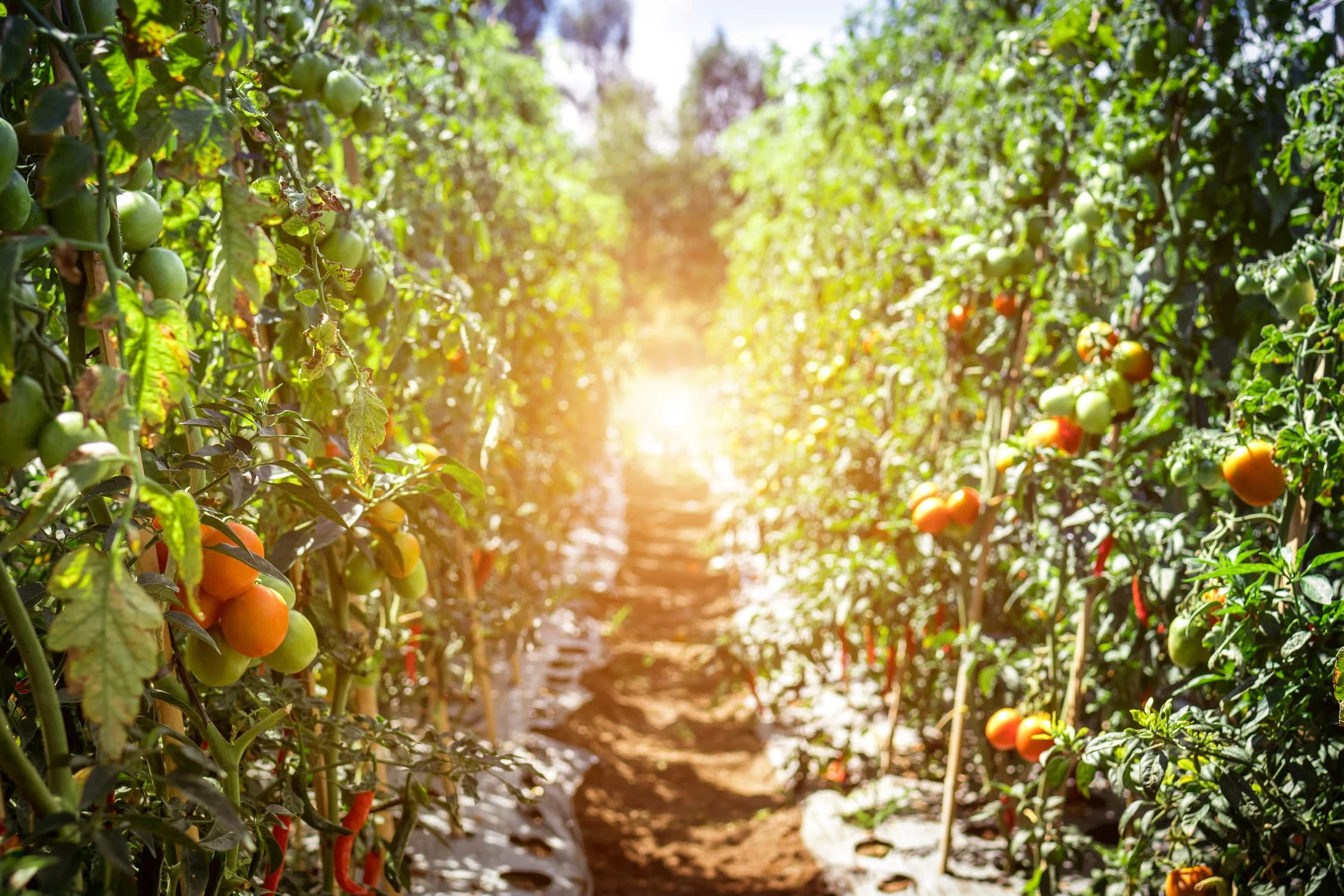
Did you know that small farmers’ access to agri-food data can impact food security on a global scale?
The Open AIR network has collected data in numerous African innovation settings over the past decade, and has developed a four-pillar taxonomy of scaling practices.
Read about how Nollywood’s persistent openness has contributed to its success at local, national, continental and global levels.
Feb. 21, 2021: Israel introduced “green passes” – evidence of COVID-19 vaccination or presumed immunity after recovery from the disease. This certificate is also known as an immunity passport.
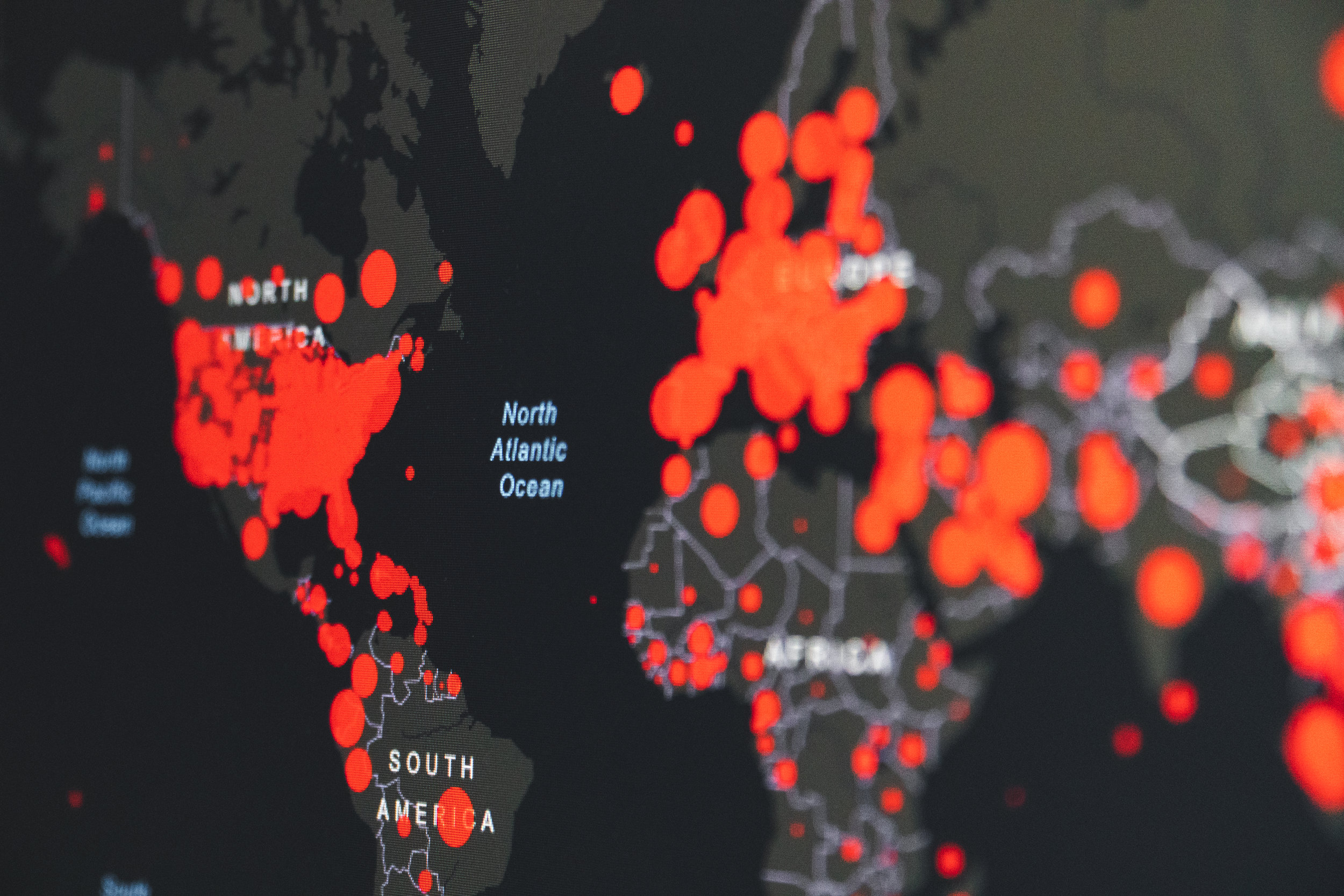
Africa’s fate is precarious in the face of COVID-19. It is the last continent to be affected by COVID-19 following the arrival of the contagion in Egypt and Nigeria in February 2020.
Except perhaps South Africa, credible statistics on the extent of the COVID-19 infection in African countries are lacking. So far, African countries could not sustain two full months of lockdown.
As an African and a Canadian, I inhabit an observatory. I am a resident in two worlds of blunt contrasts. On a good note, those contrasts offer privileged lessons on the richness and complexity of the human experience, of our world.
The Third Industrial Revolution (3IR) provided perhaps the most significant insights into Africa’s potential to fast-track its march to sustainable development.
The entrepreneurial uptake of computer technology and the increasing digitisation have made Africa a source of intellectual power in the digital sphere.
For judiciary watchers and stakeholders in the administration of Justice, Oke’s tenure had no dull moment.
Africa is the youngest and fastest growing continent. How can the continent harness this incredible potential which could readily flip into unprecedented tragedy if not well-managed?
As it embarks on another five-year periodic review of the Copyright Act, Canada has an opportunity to reflect on its copyright regime in light of the gaps that exist between it and Indigenous creative works.
British Prime Minister David Cameron privately told Queen Elizabeth II that Nigeria was “fantastically corrupt” while hosting President Muhammadu Buhari. My impression is that Her Majesty may have a better sense of history than Cameron.
Forging national unity has been a perennial challenge to Nigeria’s evolution as a country. Since independence from Britain 56 years ago, the country continues to weather severe existential storms that strike at its very core.
Nigeria’s security challenges continue to escalate. While the Boko Haram insurgence keeps mutating, kidnappings and hostage taking for ransom rise in competition as side dishes in the main course of the country’s rise in terrorism profile.
The global South is full of diverse biological and genetic resources. It’s also home to most of the world’s Indigenous communities. This is why developing countries are sensitive about protecting their genetic resources and traditional knowledge.
Nigeria’s tertiary education industry is increasingly competitive for all stakeholders. Several actors in the religious, secular and various local and international partnerships or consortia have entered the tertiary education sector with visible impact.
Over 2013, many mentioned how discussions involving Canadians within and without Canada are easily short-changed by a more exciting topic: Mayor Rob Ford and his indiscretions.
In the last decade, warlordism has been on the decline in Africa. But terrorism and other forms of political combustion appear to be on the rise.
On August 15, 2008 members of the African Diaspora Communities in the Maritime Region of Canada woke up to the shocking news of the death of one of their own, Ms. Ifeoma Stella Obi.
Nothing places Nigeria in the news lately more than the Niger Delta. Indeed, the Niger Delta is synonymous with the instability that Nigeria contributes to global oil supply and, by extension, the current global energy crisis.
The emergence of Governor Ikedichi Ohakim of Imo State is one of the litanies of surprises in the last discredited general elections. In the period preceding the elections, Imo State was a theatrical site for the absurd.
Many have the impression that this President is not overly excited about the idea that Nigeria’s dream of transformation can be entrusted in the hands of its younger generation.
In the past two weeks, in this column, I serialized a two part commentary on the Anambra and Plateau crises and other incidental issues on the state of the Nigerian nation.
On Plateau State, the President may be right in questioning the morality of Governor Dariye’s continued stay in office. However, while the President would prefer that Governor Dariye resign or be impeached, that is not as simple as it seems.
In 1999, while responding to a suggestion that retired generals and other political jobbers were making monetary donations to his bid for the presidency and would expect to be rewarded, Mr. President said that there will be no room for that if he were elected.
However the courts resolve the pending litigations on the constitutionality of the declaration of state of emergency in Plateau State six months ago, the place of that singular decision of the Obasanjo administration is firmly secured in Nigeria’s constitutional and political history.
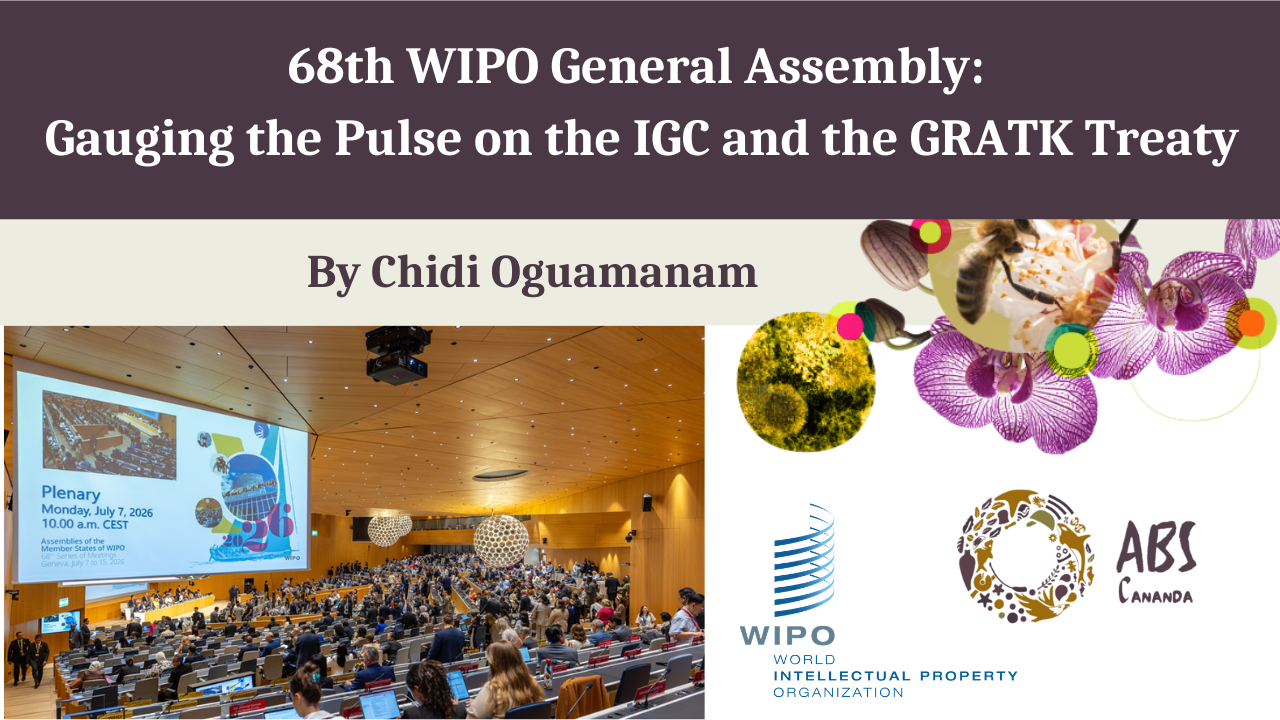
I examine what the 68th WIPO General Assembly revealed about the future of the IGC and the GRATK Treaty, including the political and legal challenges that lie ahead.
How have Indigenous Peoples and Local Communities resisted the limitations to their knowledge systems arising from Western IP?
Indigenous languages are a vehicle for communicating Indigenous Knowledge Systems and Indigenous worldviews and wisdom. The diversity of Indigenous languages reflects ecological and epistemic diversity with philosophical sophistication.
The 52nd IGC sessions elected an Indigenous IGC Chair for the first time. He is New Zealand’s Laine Fisher, a Mãori, who served as a national delegate from the Ministry for Mãori Development (Te Puni Kõkiri).
The 66th Annual General Assemblies of the World Intellectual Property Organization (WIPO-GA), which were held in Geneva from July 8-17, 2025, have just concluded.
Delegates to the WIPO Special Committee on Intellectual Property and Genetic Resources, Traditional Knowledge and Traditional Cultural Expressions resumed and concluded their last deliberations for the 2024-2025 biennium on May 30-June 5.
After one week of deliberations from March 3-7, the 50th WIPO-IGC failed to negotiate a new instrument for the protection of traditional knowledge and traditional cultural expressions. The work will continue at the 51st session in May 2025.
At resumed negotiations on TK and TCEs Texts, WIPO member states missed an opportunity to leverage the momentum created by two new treaties this year.
In Geneva: experts, diplomats and many stakeholder delegations have resumed negotiations at the WIPO Intergovernmental Committee (IGC) on Intellectual Property and Genetic Resources, Traditional Knowledge and Traditional Cultural Expressions.
Over two decades of negotiations have climaxed in the birth of a new treaty in the early hours of May 24, 2024, in Geneva, Switzerland at the WIPO 2024 Diplomatic Conference on Genetic Resources and Associated Traditional Knowledge.
The WIPO Diplomatic Conference on Genetic Resources (GRs) and Associated Traditional Knowledge (ATK) is now on its second week (since May 13, 2024). We are pleased to provide an update in continuation of our first report.
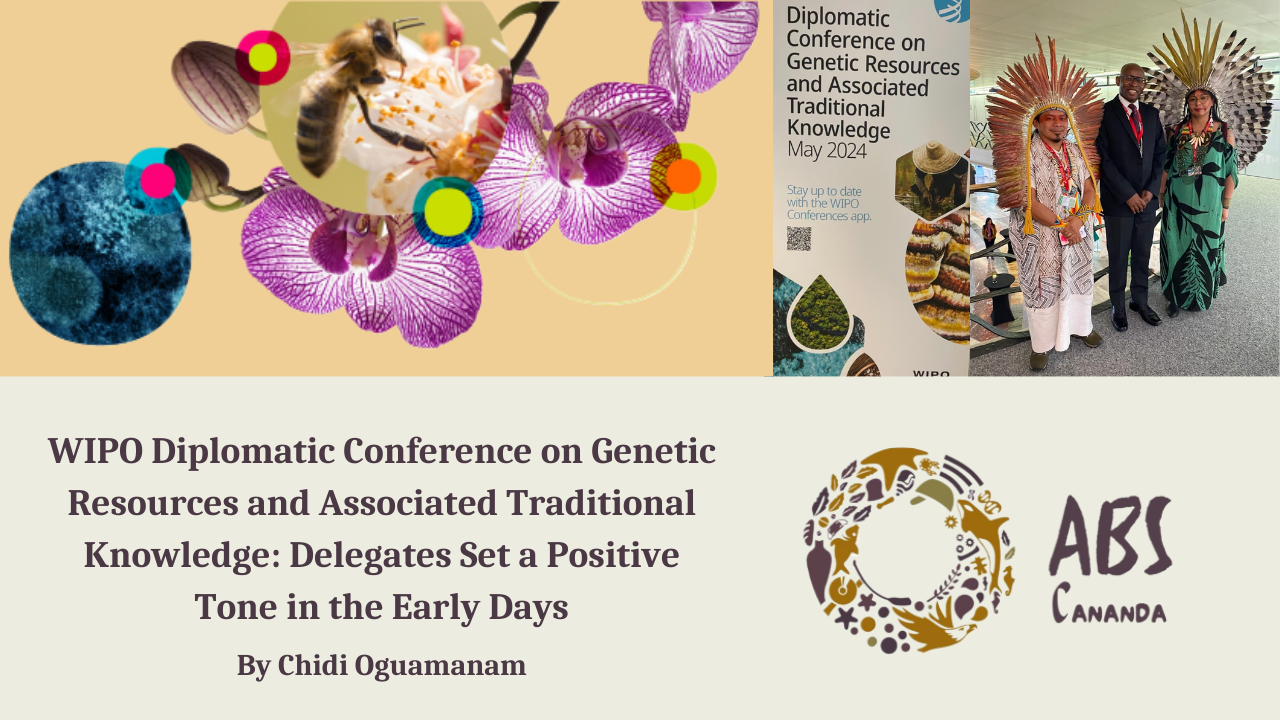
The first two days of the World Intellectual Property Organization (WIPO) Diplomatic Conference on Genetic Resources and Associated Traditional Knowledge kicked off on a generally positive note.
As experts and diplomats count down to the WIPO Diplomatic Conference in Geneva, in a final push to birth a treaty on Genetic Resources and Associated Traditional Knowledge, ABS Canada reflects on the anticipated outcome of the meeting.
With the WIPO Diplomatic Conference on Genetic Resources and Associated Traditional Knowledge approaching, the National Congress of American Indians is prepared to advocate for Indigenous Peoples’ rights and interests.
Reflections on the host country for the WIPO 2024 Diplomatic Conference on Intellectual Property, Genetic Resources and Traditional Knowledge Associated with Genetic Resources.
Prior to European contact, Indigenous Peoples lived with a diversity of political systems, legal traditions, and laws. These Indigenous legal orders guided how First Nations conducted commerce, maintained peace, and negotiated treaties.
Delegates and experts reconvened in Geneva for the 46th session of the World Intellectual Property Organization’s Intergovernmental Committee on Intellectual Property and Genetic Resources, Traditional Knowledge and Folklore (IGC 46).
Delegates to the 45th Intergovernmental Committee (IGC) continued negotiations on Traditional Knowledge and Traditional Cultural Expressions.
Professor Chidi Oguamanam has been named to the University of Ottawa's University Research Chair in Sustainable Bio-Innovation, Indigenous Knowledge Systems and Global Knowledge Governance. Research Chairs represent the University's top researchers and recognize their outstanding and important accomplishments.
Delegates met at the World Intellectual Property Organization (WIPO) in Geneva to resume the second round of negotiations for the 2022-23 biennium of the WIPO Intergovernmental Committee on Intellectual Property and Genetic Resources, Traditional Knowledge and Folklore (WIPO-IGC).
Indigenous peoples and many other local and marginalized communities have been proverbial guinea pigs for researchers, being ‘used’ as research subjects whose rights were abused without consequences.
On February 14th 2022, Newfoundland and Labrador Premier Andrew Furey announced the signing of term sheets for a $1-billion federal investment and a $1-billion federal loan guarantee for the Muskrat Falls Project.
Delegates met at the World Intellectual Property Organization to resume the first round of negotiations for the 2022-23 biennium of the WIPO Intergovernmental Committee on Intellectual Property and Genetic Resources, Traditional Knowledge and Folklore (IGC).
Indigenous peoples and Indigenous traditional knowledge may hold part of the important keys to fighting climate change for the benefit of the planet.
Prime Minister Justin Trudeau recently confirmed that Canada is involved in the World Trade Organization’s (WTO) exploration of the Indian and South African proposal to waive intellectual property (IP) rights for COVID-19 vaccines.
Canada lacks a comprehensive federal Access and Benefit-Sharing (ABS) system for governing genetic resources and the associated traditional knowledge of Indigenous peoples, despite years of advocacy.
“Dealing with health and economic challenges of COVID-19 has made one point abundantly clear for African countries – that we need broadband, faster, cheaper and expanded to the last mile of the populations.”