Blog Posts
All Publications






I examine what the 68th WIPO General Assembly revealed about the future of the IGC and the GRATK Treaty, including the political and legal challenges that lie ahead.
How have Indigenous Peoples and Local Communities resisted the limitations to their knowledge systems arising from Western IP?
Indigenous languages are a vehicle for communicating Indigenous Knowledge Systems and Indigenous worldviews and wisdom. The diversity of Indigenous languages reflects ecological and epistemic diversity with philosophical sophistication.
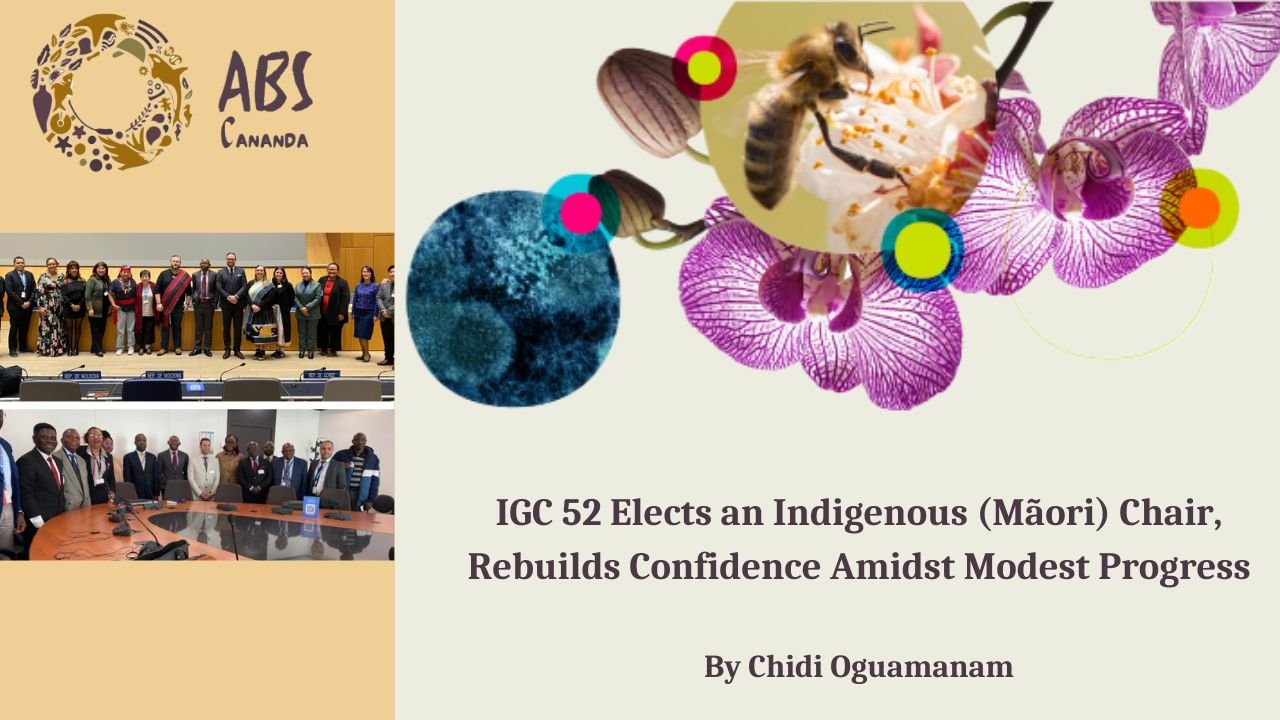
The 52nd IGC sessions elected an Indigenous IGC Chair for the first time. He is New Zealand’s Laine Fisher, a Mãori, who served as a national delegate from the Ministry for Mãori Development (Te Puni Kõkiri).
The 66th Annual General Assemblies of the World Intellectual Property Organization (WIPO-GA), which were held in Geneva from July 8-17, 2025, have just concluded.
Delegates to the WIPO Special Committee on Intellectual Property and Genetic Resources, Traditional Knowledge and Traditional Cultural Expressions resumed and concluded their last deliberations for the 2024-2025 biennium on May 30-June 5.
After one week of deliberations from March 3-7, the 50th WIPO-IGC failed to negotiate a new instrument for the protection of traditional knowledge and traditional cultural expressions. The work will continue at the 51st session in May 2025.
At resumed negotiations on TK and TCEs Texts, WIPO member states missed an opportunity to leverage the momentum created by two new treaties this year.
In Geneva: experts, diplomats and many stakeholder delegations have resumed negotiations at the WIPO Intergovernmental Committee (IGC) on Intellectual Property and Genetic Resources, Traditional Knowledge and Traditional Cultural Expressions.
Over two decades of negotiations have climaxed in the birth of a new treaty in the early hours of May 24, 2024, in Geneva, Switzerland at the WIPO 2024 Diplomatic Conference on Genetic Resources and Associated Traditional Knowledge.
The WIPO Diplomatic Conference on Genetic Resources (GRs) and Associated Traditional Knowledge (ATK) is now on its second week (since May 13, 2024). We are pleased to provide an update in continuation of our first report.
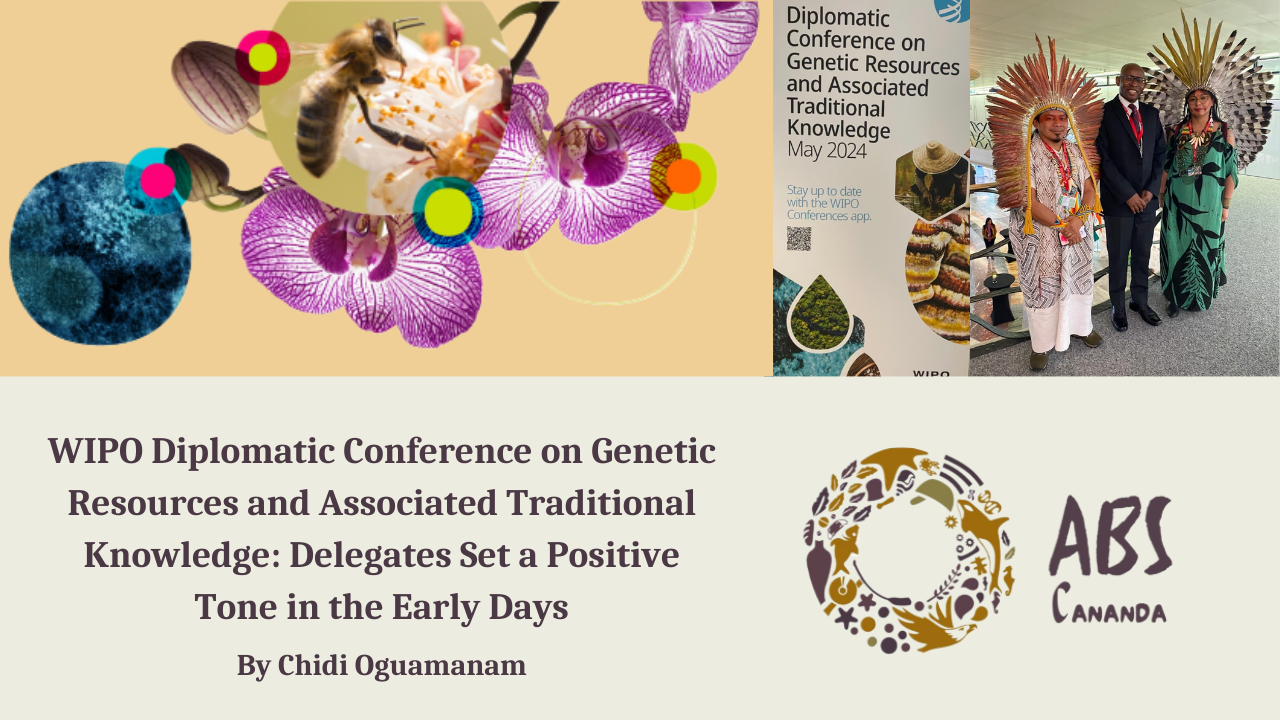
The first two days of the World Intellectual Property Organization (WIPO) Diplomatic Conference on Genetic Resources and Associated Traditional Knowledge kicked off on a generally positive note.
As experts and diplomats count down to the WIPO Diplomatic Conference in Geneva, in a final push to birth a treaty on Genetic Resources and Associated Traditional Knowledge, ABS Canada reflects on the anticipated outcome of the meeting.
With the WIPO Diplomatic Conference on Genetic Resources and Associated Traditional Knowledge approaching, the National Congress of American Indians is prepared to advocate for Indigenous Peoples’ rights and interests.
Reflections on the host country for the WIPO 2024 Diplomatic Conference on Intellectual Property, Genetic Resources and Traditional Knowledge Associated with Genetic Resources.
Prior to European contact, Indigenous Peoples lived with a diversity of political systems, legal traditions, and laws. These Indigenous legal orders guided how First Nations conducted commerce, maintained peace, and negotiated treaties.
Delegates and experts reconvened in Geneva for the 46th session of the World Intellectual Property Organization’s Intergovernmental Committee on Intellectual Property and Genetic Resources, Traditional Knowledge and Folklore (IGC 46).
Delegates to the 45th Intergovernmental Committee (IGC) continued negotiations on Traditional Knowledge and Traditional Cultural Expressions.
Professor Chidi Oguamanam has been named to the University of Ottawa's University Research Chair in Sustainable Bio-Innovation, Indigenous Knowledge Systems and Global Knowledge Governance. Research Chairs represent the University's top researchers and recognize their outstanding and important accomplishments.
Delegates met at the World Intellectual Property Organization (WIPO) in Geneva to resume the second round of negotiations for the 2022-23 biennium of the WIPO Intergovernmental Committee on Intellectual Property and Genetic Resources, Traditional Knowledge and Folklore (WIPO-IGC).
Indigenous peoples and many other local and marginalized communities have been proverbial guinea pigs for researchers, being ‘used’ as research subjects whose rights were abused without consequences.
On February 14th 2022, Newfoundland and Labrador Premier Andrew Furey announced the signing of term sheets for a $1-billion federal investment and a $1-billion federal loan guarantee for the Muskrat Falls Project.
Delegates met at the World Intellectual Property Organization to resume the first round of negotiations for the 2022-23 biennium of the WIPO Intergovernmental Committee on Intellectual Property and Genetic Resources, Traditional Knowledge and Folklore (IGC).
Indigenous peoples and Indigenous traditional knowledge may hold part of the important keys to fighting climate change for the benefit of the planet.
Prime Minister Justin Trudeau recently confirmed that Canada is involved in the World Trade Organization’s (WTO) exploration of the Indian and South African proposal to waive intellectual property (IP) rights for COVID-19 vaccines.
Canada lacks a comprehensive federal Access and Benefit-Sharing (ABS) system for governing genetic resources and the associated traditional knowledge of Indigenous peoples, despite years of advocacy.
“Dealing with health and economic challenges of COVID-19 has made one point abundantly clear for African countries – that we need broadband, faster, cheaper and expanded to the last mile of the populations.”
Medical racism against Indigenous peoples is a fact in the Canadian healthcare system. As a result of this experience, many Indigenous peoples lack trust in the healthcare system, and they limit their engagement as much as possible.
With the world on edge as COVID-19 progresses, the scientific community has sprung into gear in search of an effective treatment. Amidst this development, traditional knowledge plays a significant role in scientific endeavours.